


Maize is the crop most Northern Uganda households both eat and sell, yet average yields here sit far below what the same land can give. The gap is rarely the soil: it is seed choice, timing, weeding and fall armyworm. This guide covers each, with the variety names, spacing and numbers you need to plant a better crop this season.
- For the north, pick an early-maturing, drought-tolerant variety (e.g. Longe 10H, Bazooka).
- "H" means hybrid: higher yield but buy fresh seed each season; OPVs (Longe 5) can be saved with decline.
- Well-managed hybrid maize can target ~3,000 kg (30 bags) per acre.
- Fall armyworm is the #1 pest: scout early, treat the funnel, plant on time.
Step 1: Choose the right variety
Uganda’s maize varieties come in two kinds, and the difference matters for your wallet. Open-pollinated varieties (OPVs) can be saved and replanted, with a gradual yield decline. Hybrids (their names end in “H”) yield more and more uniformly but must be bought fresh every season: saved hybrid seed loses vigour fast. Most improved varieties are bred by NARO’s crops institute, NaCRRI Namulonge.
| Variety | Type | Maturity | Why it suits the north |
|---|---|---|---|
| Longe 10H | Hybrid | ~120 days | Bred for short-rain areas incl. the north; drought-tolerant |
| Bazooka (UH 5354) | Hybrid | early–mid | Drought-tolerant and resistant to Maize Lethal Necrosis |
| Longe 7H / 9H / 11H | Hybrid | ~120 days | High-yield hybrids for mid-altitude |
| Longe 5 (“Nalongo”) | OPV | ~110–115 days | Quality Protein Maize; seed can be saved (with decline) |
Buy real seedMaize, especially Longe 5, is among Uganda's most counterfeited seed. Buy certified seed from a known dealer or cooperative, in sealed, labelled packs. Recycled or fake seed is the most common reason a maize crop disappoints.
Step 2: Plant well
Spacing
A standard recommendation is 75 cm between rows and 30 cm within the row. Intensive growers chasing top yields plant one seed per hill at closer spacing.
Seed rate & depth
About 10 kg of seed per acre. Plant 2–10 cm deep (deeper in dry, sandy soil) into moist soil. Conventional planting uses up to three seeds per hole, then thin; intensive uses one seed per hill.
Feed the crop
Apply DAP at planting for strong roots, then top-dress with urea when the maize is about knee-high (around 45 cm). Manure helps where fertilizer is scarce.
Weed on time
Weed first about 2–3 weeks after emergence, and again when the crop is knee-high. Early weeds steal the most yield.
Step 3: Aim for the yield the land can give
Well-managed hybrid maize can target ~30 bags/acre; recycled local seed yields far less.
Step 4: Beat the pests, fall armyworm above all
Since arriving in Uganda in 2016, fall armyworm has become the number-one maize pest: most farmers rank it first. The caterpillar feeds inside the funnel (whorl) of young plants and can devastate a crop.
Fall armyworm controlScout early and often, checking the funnel of young plants. Treat the funnel with a recommended insecticide where you find infestation. Plant early so the crop is ahead of peak pest pressure. And consider push-pull, intercropping with Desmodium and a Brachiaria border, which has cut infestation to around a third of that in sole-crop fields.
Watch also for stalk borers (destroy old crop residues, plant early) and maize streak virus (grow tolerant varieties: many Longe hybrids carry tolerance). Choosing a resistant hybrid handles several of these threats at once.
Step 5: Plant with the season
Northern Uganda has one long rainy season (roughly March/April–October/November), not the two separate seasons of the south. Because it is long, many farmers fit two maize crops into it: an early planting at the onset of the rains and a later one around mid-season. The single most important timing decision is to plant at the very onset of the rains, which means having the land prepared before the rains arrive, not after.
| Planting | Plant | Harvest |
|---|---|---|
| Early crop | March–April (at onset) | June–August |
| Later crop | July–August | November–January |
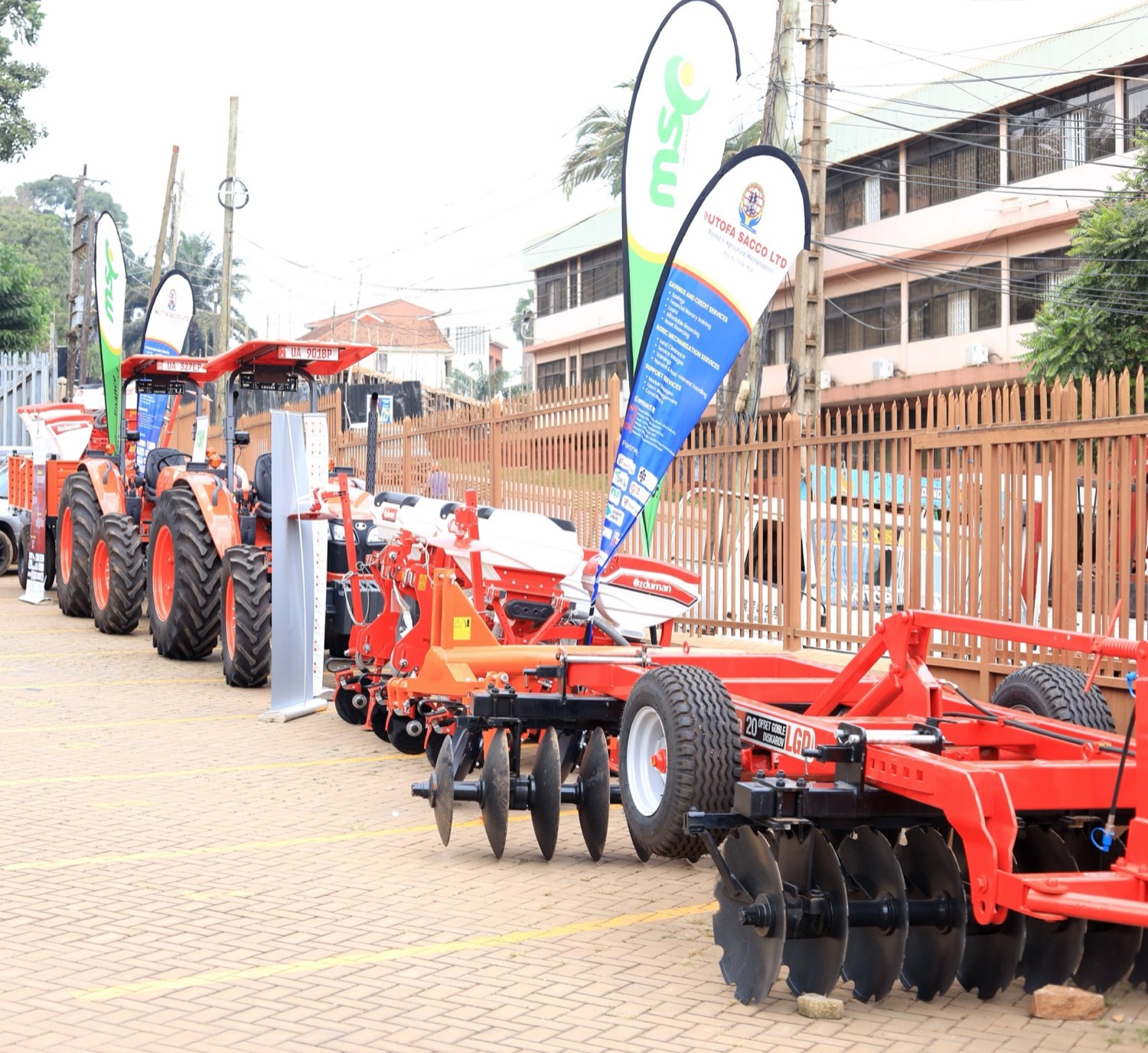
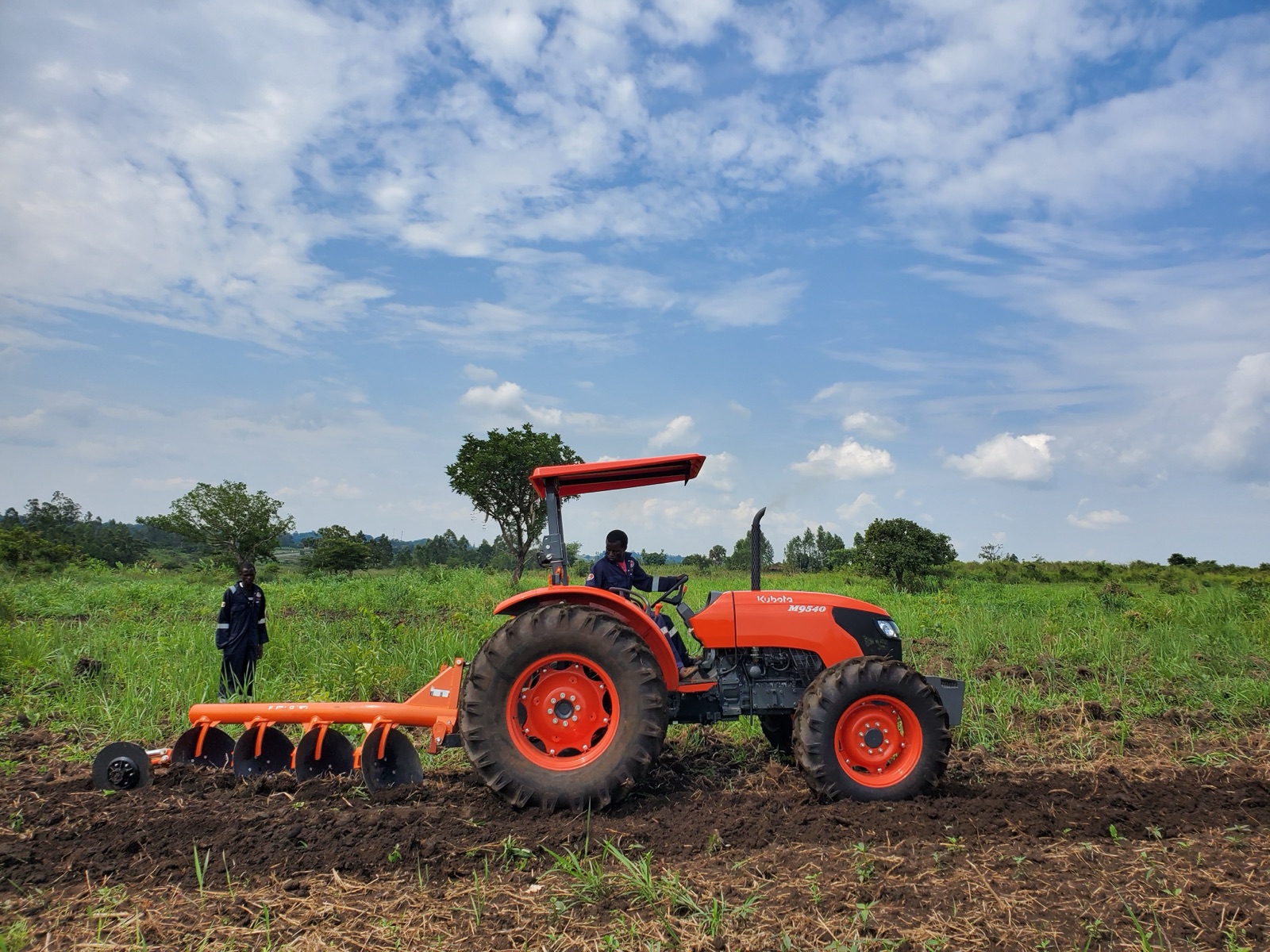
Because rainfall in the north is increasingly erratic, the onset date shifts year to year, so judge by the rains, not the calendar, and choose an early-maturing variety that can finish within the season. A tractor-prepared field lets you plant the moment the rains break, instead of losing weeks opening land by hand.
Put it together
Better maize in the north is the sum of small right choices: real improved seed, planted on time at the right spacing, fed and weeded early, defended against fall armyworm, and prepared for with mechanized land opening. Then handle it well after harvest and sell it together for a fair price.
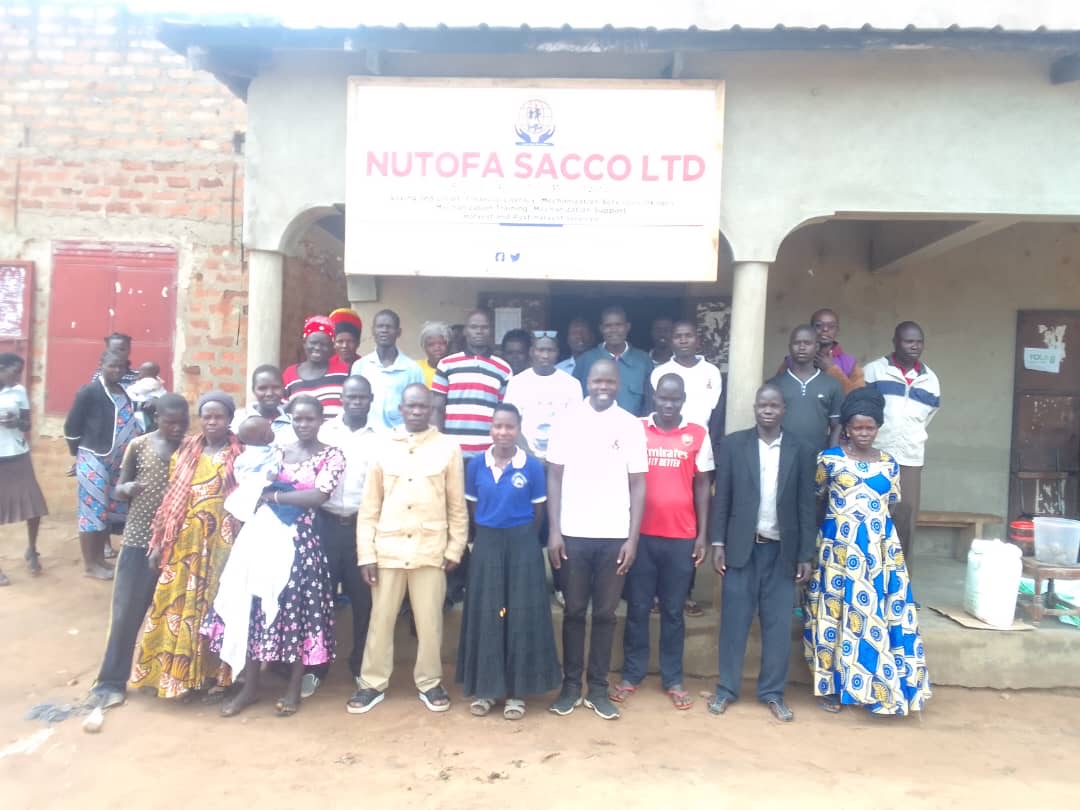
NUTOFA members access quality seed, mechanized land preparation and collective marketing through one membership, see our services or become a member.
- NaCRRI Namulonge / NARO: Longe and Bazooka maize varieties; Daily Monitor: maize varieties and planting guides.
- Business Focus / Ugandan agronomy guides: spacing, seed rate, and ~3,000 kg/acre intensive yield target.
- Frontiers in Insect Science: fall armyworm the #1 maize pest in Uganda (since 2016); push-pull cutting infestation to ~36–38% vs 95%, 2024.
- CIMMYT: Bazooka drought- and MLN-resistant hybrid, NaCRRI/NARO.
- Theoretical and Applied Climatology / FAO crop calendar: Northern Uganda's single long (unimodal) rainy season and planting windows within it.
Frequently asked questions
-
For the north's shorter, less reliable rains, choose early-maturing, drought-tolerant varieties. Longe 10H (a NaCRRI hybrid) is recommended for short-rain areas, and Bazooka is bred for drought and disease resistance. Longe 5 is a popular open-pollinated variety. Hybrids (names ending in H) yield more but need fresh seed each season; open-pollinated varieties can be saved with some yield decline.
-
With a good hybrid, fertilizer and timely weeding, well-managed farmers target around 3,000 kg per acre (about 30 bags), and some achieve more. Local recycled seed with little input yields far less. Improving seed and management is the biggest lever on your harvest.
-
Fall armyworm is the number-one maize pest in Uganda. Scout your field early and often, especially the funnel/whorl of young plants; apply recommended insecticides into the funnel where infestation is found; plant early; and consider push-pull intercropping with Desmodium and a Brachiaria border, which has been shown to cut infestation sharply.
-
Northern Uganda has one long rainy season (roughly March/April–October/November), not two separate seasons like the south. Plant at the onset of the rains, around March–April; because the season is long, many farmers fit in a second, later planting around July–August. Planting at the very onset, with land prepared in advance, is one of the biggest drivers of yield.