

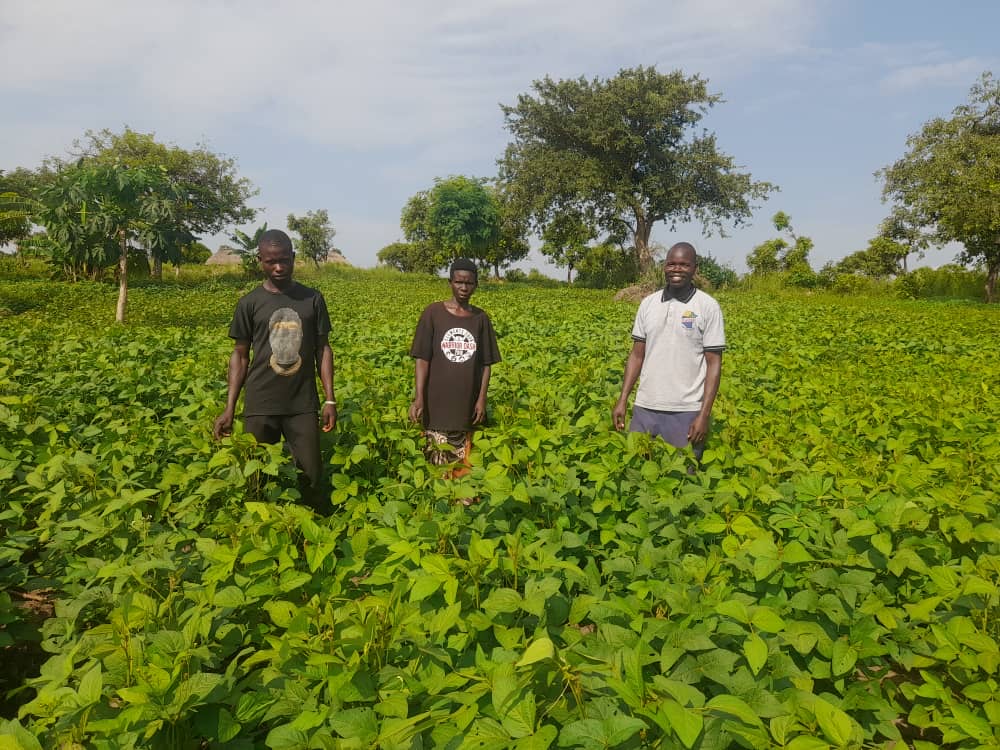
Soybean has quietly become one of Northern Uganda’s most promising cash crops, in strong demand for cooking oil and animal feed, and kind to the soil it grows in. It rewards good seed and simple agronomy, and it leaves the land richer for the next crop. Here is how to grow it well.
- Plant a Maksoy variety: they're rust-resistant and grown by ~93% of Ugandan soybean farmers.
- Use rhizobium inoculant so the crop fixes its own nitrogen and feeds the soil.
- Aim well above traditional yields: improved seed potential is 2–3.5 t/ha.
- Demand is strong and growing: edible oil and animal feed.
Choose a Maksoy variety
Uganda’s soybean breeding is led by the Makerere University soybean programme, which has released the Maksoy series, and about 93% of the country’s soybean farmers plant one. They are bred for resistance to soybean rust (the key disease) and to pod-shattering, and most also resist lodging (Maksoy 2N being the exception). For the north’s shorter, less reliable rains, lean toward the early-maturing types.
| Variety | Maturity | Yield potential | Note |
|---|---|---|---|
| Maksoy 1N | ~90 days | 2–3 t/ha | Earliest; good for short seasons |
| Maksoy 3N | ~100 days | up to 3.5 t/ha | High yielder; ~22% oil |
| Maksoy 5N / 6N | ~93–96 days | 2–3.5 t/ha | Early, rust-resistant |
| Maksoy 7N | ~3 months | 3–3.5 t/ha | Newest release (2026), strong rust resistance |
Plant, and let it feed itself
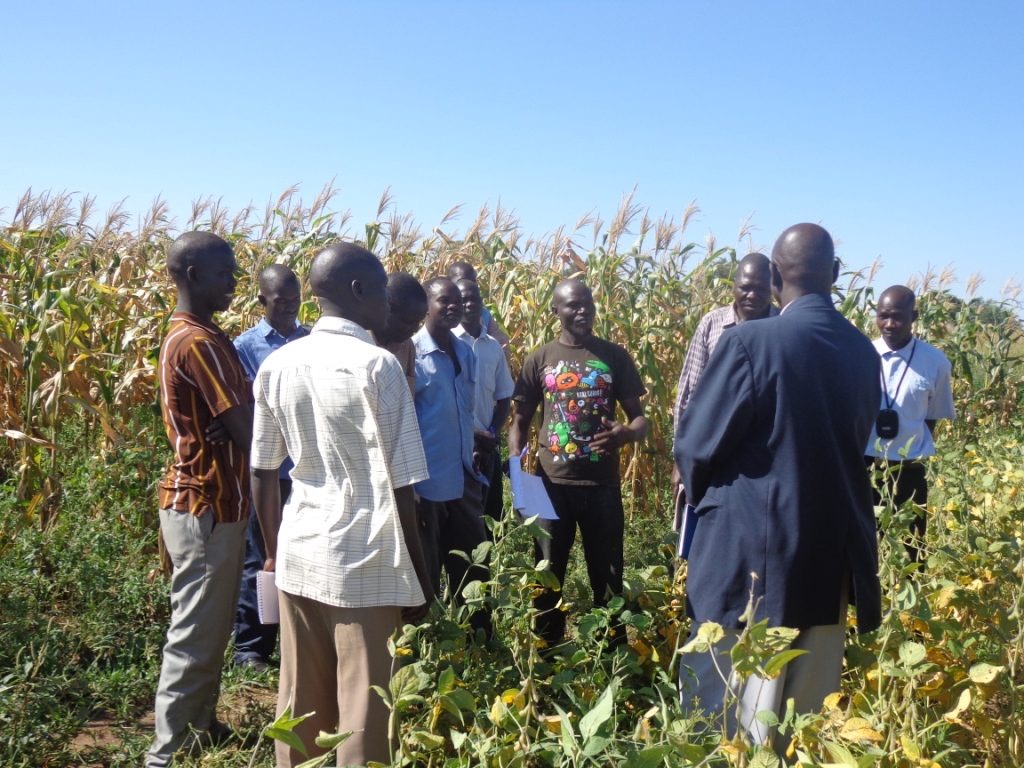
Soybean’s superpower is biological nitrogen fixation: in partnership with rhizobium bacteria in its root nodules, it pulls nitrogen from the air, supplying much of its own needs and leaving nitrogen behind for the next crop. That is why soybean is an excellent crop to rotate before maize.
Spacing & seed
Plant in rows about 60 cm apart with seeds about 5 cm apart, one seed per hole. Use clean, certified seed.
Inoculate the seed
Where the right native bacteria are scarce, treat the seed with rhizobium inoculant at planting, about 10 g per kg of seed, to maximise nodulation and yield.
Weed early
Keep the young crop weed-free; soybean competes poorly with weeds in its first weeks.
Harvest before shattering
Modern Maksoy varieties resist pod-shattering, but still harvest promptly once mature and dry properly to protect quality.
Free fertilizer for your maizeBecause soybean fixes nitrogen and leaves the soil richer, a soybean–maize rotation can cut the fertilizer your maize needs the following season. The legume pays you twice: once at sale, once in soil fertility.
Yields to aim for
Improved Maksoy seed with inoculant and good practice lifts yields well above traditional plantings.
A market that’s growing
Soybean is one of the government’s priority value chains, and demand pulls from two big directions: edible oil - Uganda imports the majority of its cooking-oil needs, so local oilseed is in demand - and animal feed, where soybean meal is the main protein source for a fast-growing poultry and dairy sector. Northern Uganda sits squarely in the country’s soybean belt, which makes it a natural fit for farmers here. As always, bulking your harvest through a cooperative gets you a better price than selling alone.
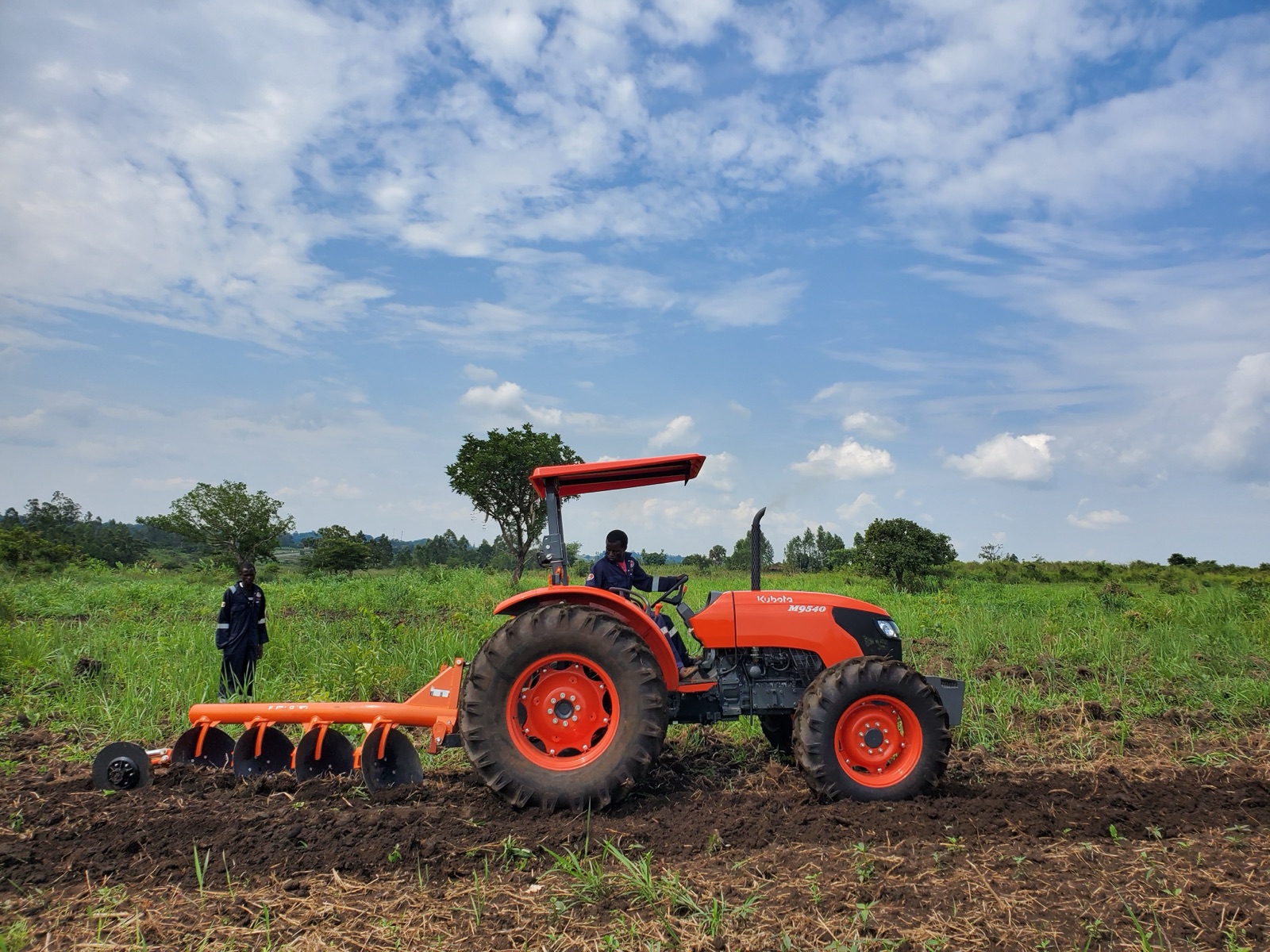
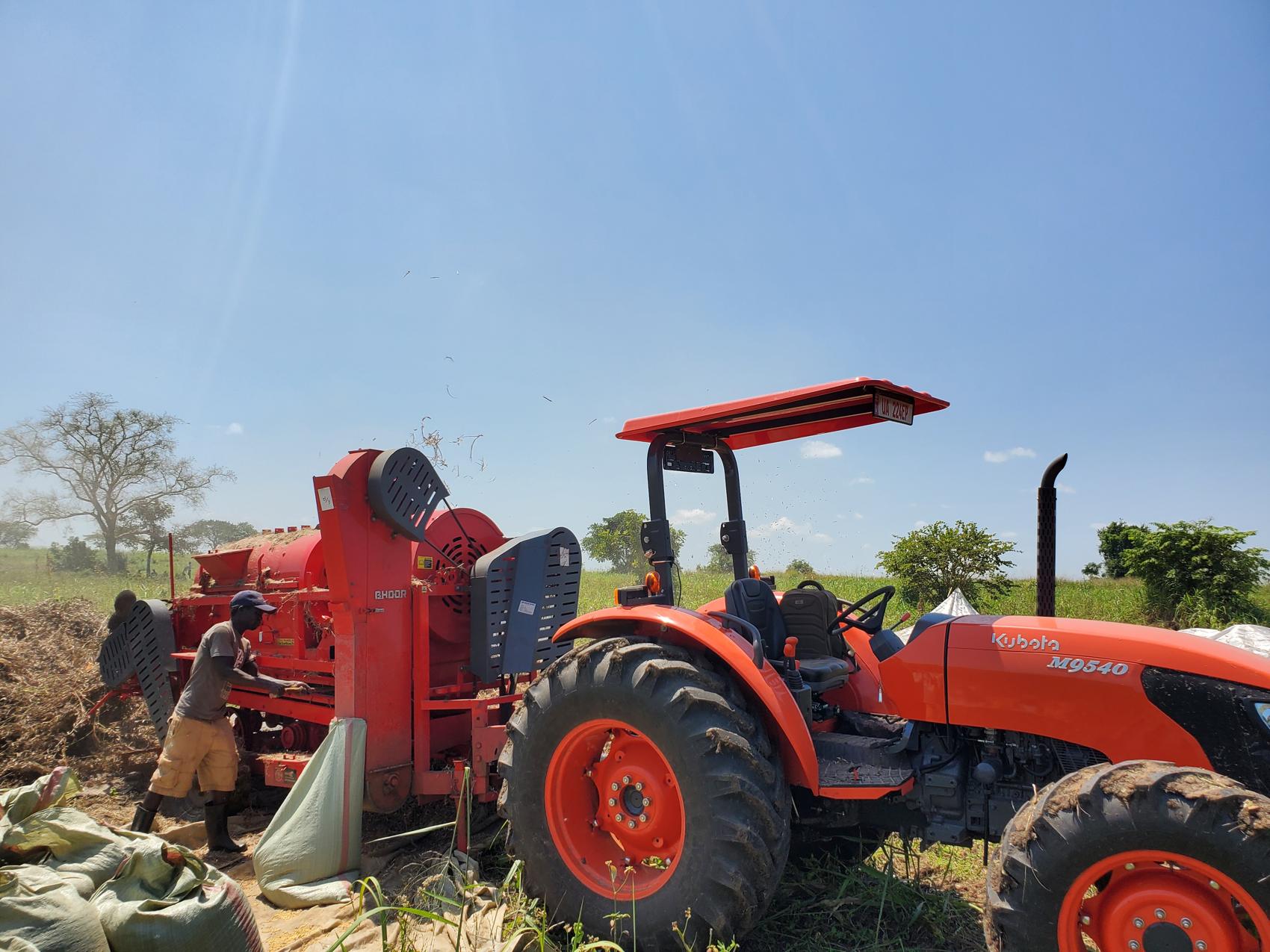
Pair quality soybean with tractor land preparation and good post-harvest handling, and rotate it with maize for healthier soil. See NUTOFA’s services or become a member.
- Makerere University Centre for Soybean Improvement (MAKCSID): Maksoy varieties, maturities and yields; CAES: Maksoy 7N release and 93% adoption, 2026.
- SNV: on-farm soybean yields (~590 kg/acre) with improved practice; spacing 60 × 5 cm.
- N2Africa: biological nitrogen fixation in soybean; rhizobium inoculant rate (~10 g/kg seed).
- Industry analysis: soybean as a priority value chain; edible-oil import dependence and animal-feed demand; northern soybean belt.
Frequently asked questions
-
The Maksoy series, bred at Makerere University, dominates: about 93% of Ugandan soybean farmers plant a Maksoy variety. For the north's shorter rains, early-maturing types like Maksoy 1N, 5N, 6N and the newest 7N (around 90–96 days) work well; Maksoy 3N is a high yielder. The modern Maksoy varieties resist soybean rust and pod shattering, and most also resist lodging.
-
Inoculant (rhizobium bacteria) helps soybean form root nodules that fix nitrogen from the air, boosting yield and improving the soil for the next crop. Where the right native bacteria are scarce, treating seed with inoculant at planting, about 10 grams per kilo of seed, pays off. It also makes soybean an excellent rotation crop before maize.
-
Improved Maksoy varieties have a yield potential of 2–3.5 tonnes per hectare. On smallholder farms with improved seed and good practice, around 590 kg per acre has been recorded, well above traditional plantings.
-
Yes, and it is growing. Soybean is a government priority crop, feeding both the edible-oil industry (Uganda imports most of its edible oil) and the fast-growing animal-feed sector. Northern Uganda sits in the country's soybean belt.